Preventing lightning-caused wildfires

Lightning causes catastrophic fires

Skyward identifies where lightning is most likely to ignite wildfires and safely reduces cloud-to-ground strikes, protecting communities, natural resources, and critical infrastructure from catastrophic wildfires.

~50%
of North American wildfires are started by lightning
85%
of Canada's burned area is caused by lightning (historical average)
90%
of burned area in Australia's Black Summer was caused by lightning
The Problem — Skyward
I — The problem

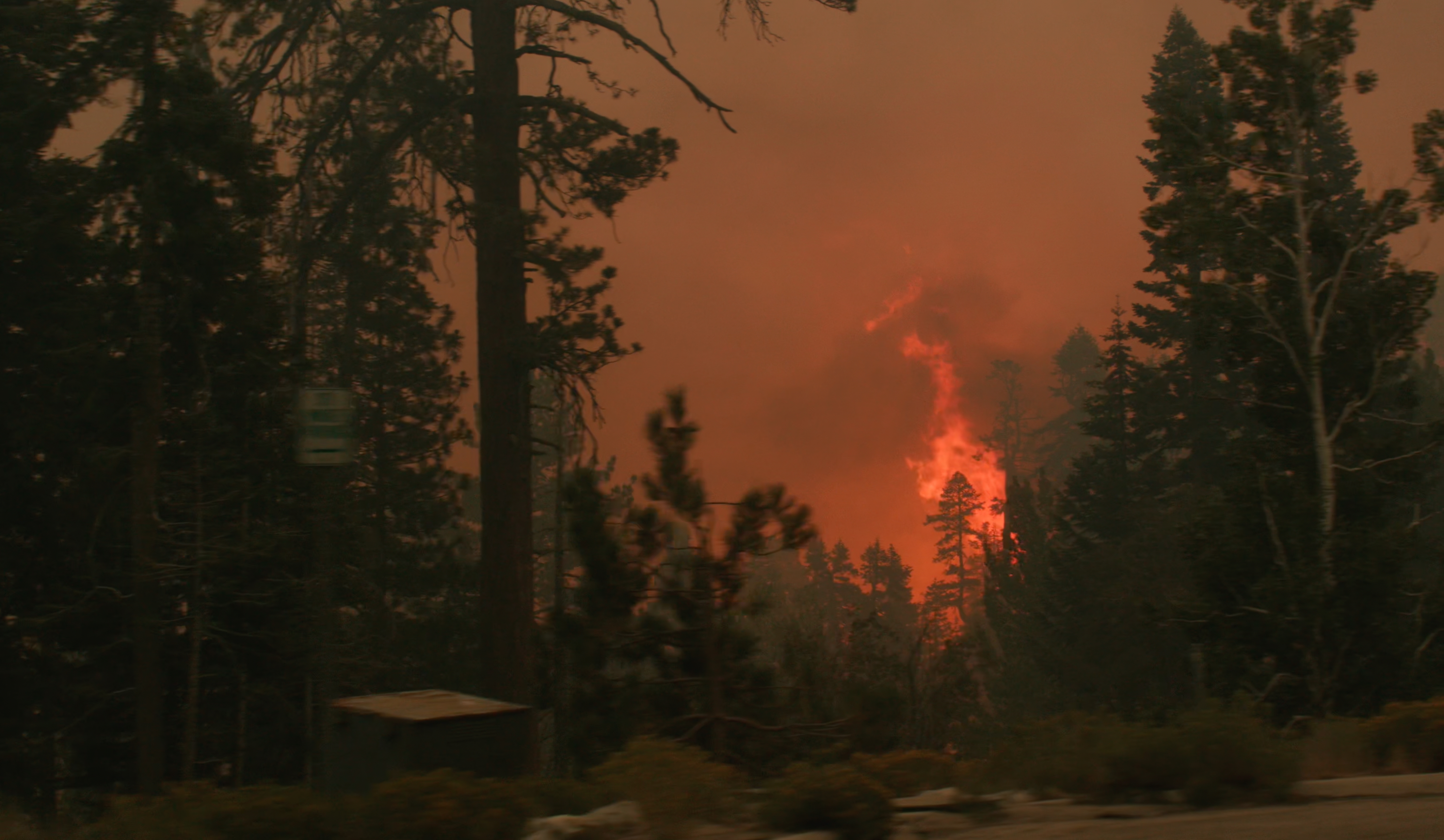
Wildfire threatens our communities and livelihoods.

Communities are forced to evacuate with only hours of warning. Smoke travels hundreds of kilometres beyond the fireline, driving spikes in emergency-room visits and resulting in long-term health impacts. Fire suppression budgets that once lasted an entire season are now exhausted by mid-summer.

In Canada's 2023 fire season alone, 18 million hectares burned — an area larger than Greece. Lightning caused 93% of that burn area, and the resulting fires released roughly 5% of global CO2e emissions, making lightning-caused Canadian wildfires the fourth-largest source of CO2e emissions in 2023, behind only China, the US, and India.

97%
of the area burned by wildfire in Canada in 2024 was ignited by lightning—not campfires, not power lines, not arson. In 2023, it was 93%.
National Forestry Database (CCFM)
II — The opportunity

Skyward is the first solution to reduce lightning ignition risk before fires start.

Fire agencies are doing more than ever — and facing more challenges than ever. Longer seasons, hotter and larger fires, and more simultaneous ignitions than crews can reach. Skyward gives them a new tool: the ability to reduce lightning-caused wildfire ignitions.

Category 01
Fuel Management
Weeks to years before ignition
Prescribed burns, thinning, defensible space. Reduces the baseline severity of fires that do occur.
Category 02
Ignition Prevention
Skyward — Hours before ignition
Forecasts where lightning is most likely to start a wildfire and reduces cloud-to-ground strikes.
Category 03
Suppression
After ignition — during fire
Costly suppresion: air tankers, ground crews, retardant.
Category 04
Evacuation
After ignition — during fire
People and communites evacutated.
Years before
Ignition
Hours after
Days after
What ignition prevention reduces
III — Skyward

Stop the strike. Prevent the fire.

What if — on the worst days — we could stop lightning ignitions before they happen? Skyward forecasts where lightning is most likely to result in a devastating wildfire and reduces the cloud-to-ground strikes before ignition. It supports and buys time for critical wildfire risk reduction acitivites, such as prescribed fire and fuel management.

Skyward is a rapidly deployable upstream solution for fire managers to prevent catastrophic wildfires ignited by lightning. A way to act on the cause of ignition when the forecast turns bad and there's nothing else to deploy.

Technology

Predict the strike.
Prevent the fire.

Skyward forecasts the lightning that matters, reduces the likelihood they will strike, and leaves everything else untouched.
01
Forecast
Find the strikes that matter
02
Intervene
Reduce cloud-to-ground lightning
03
Prevent
Less ignition. Less fire.
01 — Forecast

Find the lightning most likely to start a wildfire.

Most lightning is harmless. Of the hundreds of millions of strikes that cross North America each year, a minuscule number ignite wildfire.

Skyward predicts where lightning is likely to ignite wildfires. This enables wildfire agencies to take action before storms arrive, rather than after fires start.

Proprietary forecasts — industry-leading fire ignition risk mid-casting and now-casting
Advance warning window — hours to days of lead time before high-risk storms arrive, enabling safe and targeted deployment decisions
How lightning works

How lightning starts fires.

Have you seen those giant fluffy clouds piling up in the sky? Here's what's happening inside.

01
Electrical Charge Separation. Within storm clouds, collisions between ice particles and water droplets cause electrical charges to separate, creating regions of positive and negative charge.
02
Electrical Discharge (Lightning). As the difference in electrical potential between these charged regions increases, energy builds within the cloud. When this electrical potential becomes strong enough to overcome the insulating properties of air, a rapid discharge occurs as lightning—a powerful spark that can reach temperatures several times hotter than the surface of the Sun.
03
Heat ignites fuel. Most strikes hit something wet and fizzle out. But if lightning hits dry grass, crispy pine needles, or an old log, a tiny flame might be born. Skyward predicts where this is most likely to happen so firefighters can better prepare.
Watch: how lightning works →
02 — Intervene

Reduce the lightning strikes that reach the ground.

When a high-risk storm builds toward lightning, Skyward gives the electrical charge somewhere else to go, reducing the chance those strikes reach the ground and start wildfires.

A small, precise amount of lightning reduction material is released into the storm. The material enables some of the electrical charge to redistribute quietly inside the cloud, instead of building up and eventually creating a cloud-to-ground lightning strike.

The science isn't new: lightning suppression research goes back to the 1960s. What's new is the precision to deploy it only where and when a fire might otherwise start.

Highly targeted — specific storms, on specific high-risk days, in full coordination with authorities.
Short lived — a typical thunderstorm cell lasts about 30 to 60 minutes, though larger storm systems can persist for several hours.
No effect on precipitation — Skyward's method targets the electrical charge within high-risk storms, not moisture or rainfall.
Material safety

Wildfire smoke kills. Fire retardant has growing environmental concerns. Skyward's materials are inert and non-toxic.

Each prevented ignition is a fire that doesn't happen. Tens of thousands of tonnes of CO₂ never emitted. Hundreds of homes never threatened. Days of smoke never breathed.

By comparison
One retardant drop: 3,000 gallons. One Skyward intervention: a tiny fraction of that volume.
Non-toxic
No identified risk to people, livestock, wildlife, or the environment at operational quantities.
Inert
Non-reactive. Silica or basalt fibre with an aluminum nano-coating.
No PFAS
No forever chemicals.
Rainfall
No effect. Skyward's material acts only on electrical charge inside the storm, not on moisture.
03 — Prevent

Fewer fires to fight.

When several lightning strikes hit at once, suppression systems can struggle to keep up. Skyward prevents enough of those ignitions to break the cascade. Reducing wildfire ignitions means less smoke, less carbon, less fire to fight.

Complements existing tools — prescribed and cultural fire, fuel management, suppression — all still essential. Skyward adds a missing layer.
Crew capacity relief — by reducing simultaneous ignitions during peak storm events, Skyward allows crews to respond effectively to the fires that do start.
By design

One purpose: reduce wildfire ignitions.

Each intervention is scoped to specific storms, on high-risk days. It isn't designed to alter rainfall, regional weather, or climate.

Duration
Hours. Not continuous.
Scope
Specific storms. Not regional climate systems.
Safety
Inert, non-toxic materials.
Team

A team rooted in wildfire, AI, and science.

Advisory board
"Wildfires are no longer a seasonal threat — they are a year-round crisis consuming lives, communities, and critical resources at an unprecedented scale around the world. For too long, our response has been just that: response.

Skyward is changing the equation by attacking the problem at a frequent ignition source. Preventing lightning strikes before they ignite is exactly the kind of bold, science-based thinking the industry needs."

Dr. Lori Moore-Merrell
Former U.S. Fire Administrator
LinkedIn profile ↗
Join the team
If this work matters to you and you have a background in science, AI, wildfire management, or field operations — we'd like to talk.
Our investors

Lightning starts the wildfires we can't stop.

Skyward prevents them before they begin — using AI to identify the strikes most likely to ignite catastrophic fires, and precision atmospheric operations to suppress them.

Contact Skyward

We welcome inquiries from wildfire agencies, partners, and organizations interested in Skyward’s work. Share a few details below and our team will be in touch.
We may not be able to respond to all submissions. Response times may be longer during wildfire season (May–September).
NAME *
JOB TITLE *
TYPE OF INQUIRY *
ORGANIZATION NAME
EMAIL *
INQUIRY *
Thank you! Your submission has been received!
Oops! Something went wrong while submitting the form.
X
© 2026 Skyward Wildfire Technologies Inc.
All right reserved.
Privacy PolicyTerms of Service